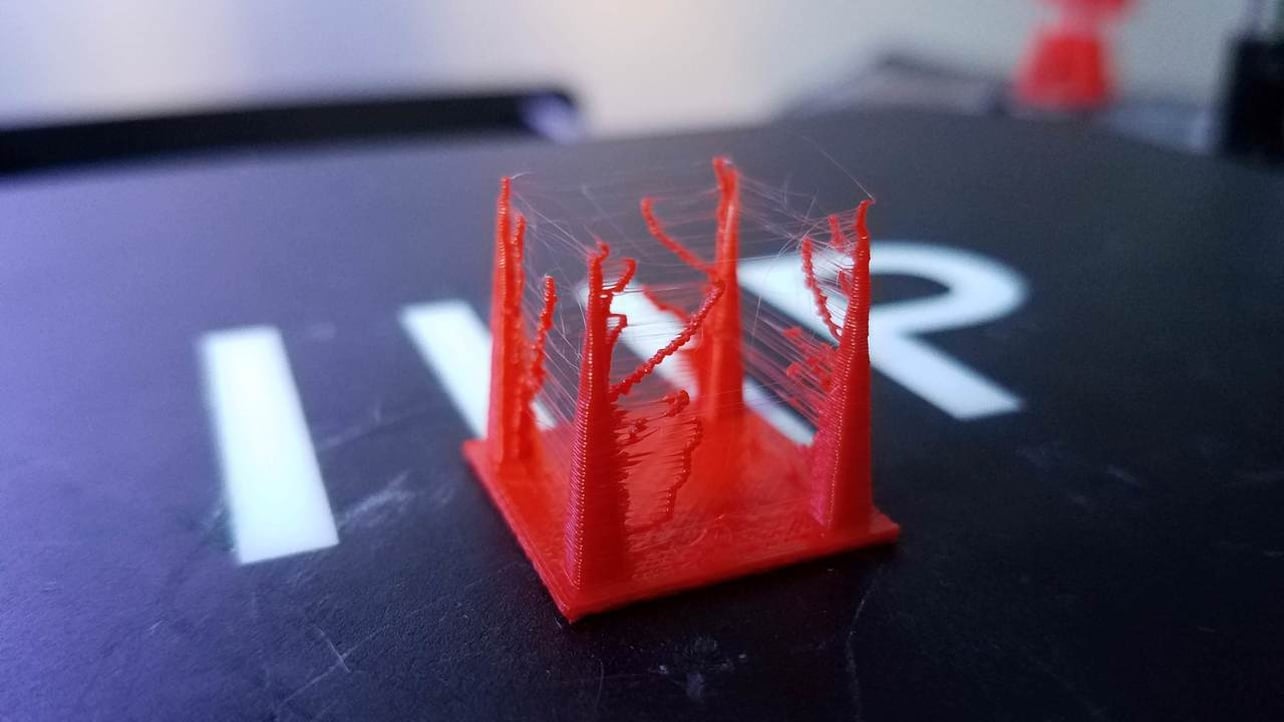
 3D printer stringing is a common problem, especially with flexible materials. Overcome this issue with these five simple solutions!
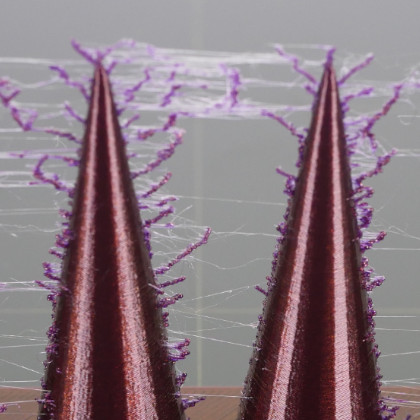 Stringing or oozing, also known as "hairy prints", is the name given for when small strings of filament are left on a printed model. This usually happens when the filament keeps flowing from the nozzle while the extruder is moving to another object.